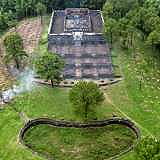
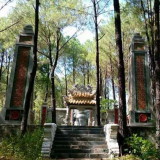
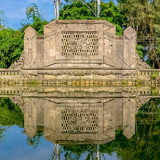
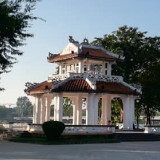
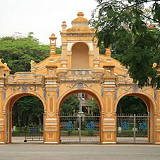
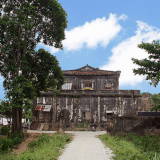
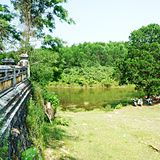
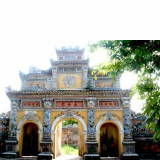
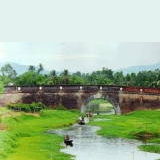
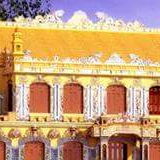
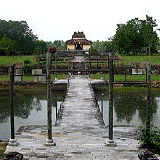
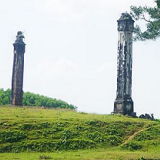
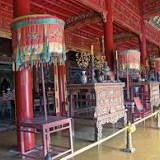
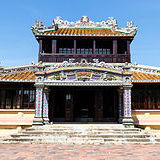
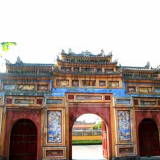
Lang Xuong Tho, also known as the Tomb of Queen Mother Tu Du, is a historic tomb located in Thuy Bang Village, Huong Thuy District, Thua Thien Hue Province, Vietnam. She was the wife of King Thieu Tri, mother of king Tu Duc, so her tomb is within King Thieu Tri's Mausoleum.
Duong Xuan Thuong, Huong Thuy, Thua Thien Hue, Vietnam
192 views 💖 1 👍 0
Vua Kien Phuc, whose birth name was Nguyen Phuc Ung Dang, was the 7th emperor of the Nguyen Dynasty in Vietnam. He was born on February 12, 1869, and ascended to the throne in 1883 at the age of 14. King Kien Phuc was only king for 8 months, and became the most ill-fated monarch of the Nguyen Dynasty, when he died just 15 years old - 1884.
King Hiep Hoa was the sixth emperor of the Nguyen Dynasty in Vietnam and reigned for four months. His birth name was Nguyen Phuc Hong Dat (Nguyen Phuc Hong Dat), and he was born in 1808 in Hue, the imperial capital of Vietnam. Hiep Hoa was the 29th son of Emperor Thieu Tri.
Vua Bao Dai, whose birth name was Nguyen Phuc Vinh Thuy, was the last emperor of the Nguyen Dynasty in Vietnam. He was born on October 22, 1913, and ascended to the throne in 1926 at the age of 12. Bao Dai's reign witnessed significant political changes and challenges as Vietnam went through colonial rule, Japanese occupation during World War II, and the struggle for independence.
Lang Tien Cung, also known as Tu Thong Lang or Lang Van Van, is the burial place of Queen Huo Thien Thuan, the second wife of King Dong Khanh, the mother of King Khai Dinh. Her sure name is Duong Thi Thuc (1868 - 1944). This is one of the largest queen tombs in Hue.
Cong vien Thuong Bac is a park located in the Phu Hoa district of Thua Thien Hue province, Vietnam. It is situated along Tran Hung Dao Street, which is amajor road in the area. In 1870, King Tu Duc allowed to build the park named Cong Vien Thuong Bac to welcome the ambassadors.
After the defeat of Le Van Khoi in the South. King Minh Mang set up aspecialized agency to manage the secret issues, especially in the military matters. The king followed the model of the Song Dynasty's secret service agency and the Qing Dynasty's intelligence army to establish the secret service agency for the country - Tam Toaor Vien Co Mat - to manage the secret issues.
Ta ng Thu Lau is abuilding built on Huc Hai Lake, Hue in 1825, used as a place to store old official documents of the Nguyen Dynasty's offices and six ministries. This can be considered as a Vietnamese archive under the Nguyen Dynasty that stores rare and precious documents related to the activities of the court and the changes of the country.
Lang Thoai Thanh or Thoai Thanh Tomb is the tomb of the mother of emperor Gia Long. This is the mausoleum of Queen Hung To Hieu Khuong (1738-1811), the second wife of Nguyen Phuc Con (Luan) and the mother of King Gia Long. Her sure name is Nguyen Thi Hoa n.
Van Thanh, Huong Ho, Huong Tra , Thua Thien Hue, Vietnam
276 views 💖 3 👍 0
Van Mieu Hue, also known as the Temple of Literature in Hue, is a historical site located in Thua Thien Hue, Vietnam. Van Mieu Hue is not only a significant historical and cultural site but also a place that highlights the importance of education and learning in Vietnamese society. It offers visitors a glimpse into Vietnam's imperial past and provides an opportunity to appreciate the beauty of traditional Vietnamese architecture.
In the vestiges of the imperial capital of Hue, Truong Sanh palace was built north west of Hue Citadel with the original role of the flower garden, where the Nguyen dynasties invite their mother and family to visit the scenery.
Khanh Ninh Palace (Cung Khanh Ninh) is a historical palace located in the province of Thua Thien Hue in central Vietnam. It was built in the 1920s by King Khai Dinh as avacation retreat and hunting lodge. The palace is known for its mix of Vietnamese and European architectural styles and is now open to visitors as atourist attraction.
Thai Hoa Palace (Dien Thai Hoa), also known as the Palace of Supreme Harmony, is a significant historical attraction located within the Imperial City in Hue, Thua Thien Hue, Vietnam. It was constructed during the Nguyen Dynasty in the early 1800s and served as the main ceremonial hall for important events such as the emperor's coronation and major court ceremonies.
Kien Trung Palace (Dien Kien Trung) is a historic palace located within the Imperial City in Hue, Thua Thien Hue, Vietnam. It was built during the Nguyen Dynasty in the early 1800s and served as the residence of Emperor Minh Mang's mother, Empress Dowager Tu Du.
Emperor Thieu Tri, the son of Minh Mang, reigned just seven years and did not have the opportunity to build his own tomb during his lifetime. At death, his body was temporarily held in Long An Temple, which the Emperor had endowed in 1845. His son, Tu Duc, built this permanent tomb in 1848.
Huong Thu, Huong Tra District, Thua Thien Hue, Vietnam
295 views 💖 3 👍 0
Dien Gia Tha nh, also known as Lang Thuan Thien Cao Hoa ng Hau, is a historical site located in Huong Thu, Huong Tra , Thua Thien Hue, Vietnam. It is aroyal tomb of Queen Dowager Tu Du, who was the mother of Emperor Thieu Tri of the Nguyen dynasty.
The The Mieu, also called The To Mieu, is a historical site located in Le Huan, Phu Hau, Tha nh pho Hue, Thua Thien Hue, Vietnam. It is a temple complex dedicated to the worship of the Nguyen dynasty's emperors and their consorts.
Thai Binh Pavilion (Thai Binh Lau) is a historic site located in Doa n Thi Diuƒm, Phu Hau, Tha nh pho Hue, Thua Thien Hue, Vietnam. It is atraditional Vietnamese-style pavilion that was constructed during the reign of Emperor Gia Long in the early 19th century.
Dien Tho Palace (Cung Dien Thu) is a historical site located in the city of Hue, the former imperial capital of Vietnam. It was built in 1848 by Emperor Thieu Tri of the Nguyen Dynasty as aresidence for his mother, Empress Dowager Tu Du.
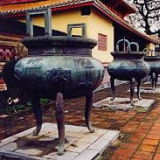
The Nine Tripod Cauldrons (Cuu Dinh) were aset of bronze cauldrons that were important artifacts of the Nguyen Dynasty in Vietnam. The cauldrons were commissioned by Emperor Minh Mang in 1835 and were cast in Hue, the imperial capital of Vietnam at that time. Each cauldron was engraved with various designs and inscriptions, including the names of the regions and provinces that made contributions to their creation.